Apeiron and Logos: From Pure Potentiality to Cosmic Competence
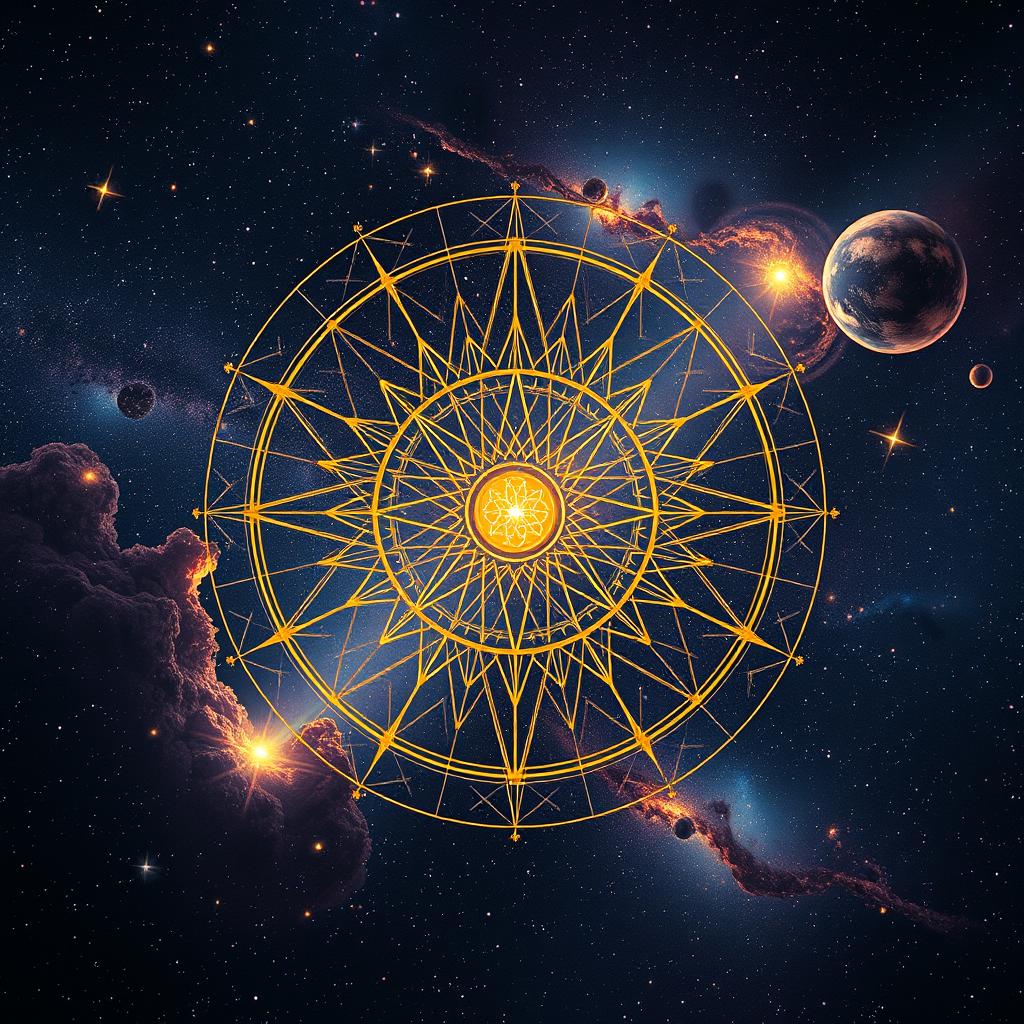
When reason starts dancing with the universe
The ancient Greeks saw the world with eyes we have largely forgotten.
For them, the universe was not a collection of things, but a living movement expressing itself through rhythm, measure, and invisible law.
On one side stood Apeiron (ἄπειρον), the undefined infinite—the pure potential from which everything is born.
On the other stood Logos (λόγος), the reason that orders and gives form, the thread that allows chaos to become cosmos.
“The world is an ever-living fire, kindled and extinguished in measure.” — Heraclitus
Heraclitus understood that these two forces do not oppose each other: Logos does not destroy Apeiron—it guides it.
Harmony arises not from silence but from the dialogue of opposites.
To live “according to the Logos” means not to rebel against the universe, but to flow within it.
It is the seed of what we might call cosmic competence: the ability to recognize the deep laws of reality and act in harmony with them.
The Stoics brought this vision into daily life.
For them, virtue was not a moral duty but a form of cosmic intelligence.
To live “according to nature” meant to understand how the whole works and to adapt, like a good sailor to the winds and currents.
The wise person doesn’t fight the storm—they adjust the sails.
Fate, they said, is like a dog tied to a cart: if it follows, it walks freely; if it resists, it is dragged along.
“To live according to nature is not to obey fate, but to understand its rhythm.” — Stoic maxim
Modern physics has rediscovered this dance between order and potentiality.
Quantum mechanics tells us that, at its deepest level, matter is not made of solid things but of possibilities: waves of probability that become real only when they interact—when they are observed.
It echoes Heraclitus: everything exists as potential until Logos—the act of attention, of presence—brings it into being.
This is also the fascination behind the so-called “law of attraction”—often oversimplified, but at heart expressing the same idea in modern language.
What you focus on manifests; what you ignore remains potential.
The universe responds not to wishes but to coherence—to how your thought, emotion, and action align with its rhythm.
To live by Logos today means cultivating that coherence.
When your thoughts, feelings, and actions pull in different directions, you create friction and chaos.
But when every gesture arises from a clear center, things flow naturally: the right people appear, events align, and difficulties become teachers.
It’s the state we call flow—when there is no conflict between the doer and what is being done.
“Logos is the music of the world: those who can hear it, dance.”
Apeiron and Logos are not dusty ideas but two living forces within us: creative freedom and the form that gives it meaning.
Too much Logos, and we become rigid; too much Apeiron, and we lose ourselves.
The art of living lies in dancing between the two—letting reason illuminate mystery without extinguishing it, and mystery feed reason without overwhelming it.
Perhaps this is the real secret of a good life: not to impose our will on the universe, but to move with it, like a musician following the invisible harmony of a score.
Then you discover that the law of the universe is not a constraint—it’s the melody that, if you can hear it, makes you dance.
by Brunus


