What Is the Most Precious Thing You Have?
Imagine — not just as a mental exercise, but as a real possibility — that you could physically switch places with Warren Buffett.
You become him, he becomes you.
No way back. Final decision.
You take his money: 160 billion dollars.
Enough to buy almost anything on the planet — houses, jets, islands, access to anyone you want, instant power on a scale that only a handful of humans have ever experienced.
But you also take his 95 years.
He, in return, takes your money — even if it’s just 1,000 euros sitting forgotten in your bank account — and he takes your age: 30, 40, 50, 60…
What would you choose?
And, more importantly: what do you think he would choose?
The answer is brutally simple: you wouldn’t accept those 160 billion even for a second, and he would grab your age before you even finished the question. Because the truth we spend our lives trying not to see — buried under notifications, meaningless debates and convenient excuses — is that time is the only truly precious asset we possess.
Everything else — money, status, projects, even health — makes sense only in relation to how much of that time remains.
The ancients knew this with astonishing clarity. Horace warned us: carpe diem, quam minime credula postero — not as an invitation to reckless pleasure, but as an act of lucidity. Lorenzo de’ Medici reminded us that youth “flees nevertheless,” and Seneca, sharper than any modern self-help guru, whispered that while you postpone things, life runs ahead of you.
Or, to quote a famous line from the movie Fight Club: “This is your life and it’s ending one minute at a time.”
Every poet, sage and philosopher, in every century, has tried to awaken us to this same truth. And yet we keep talking about “time” as if it were a financial resource to manage: I don’t have time, I’m wasting time, I wish I had more time.
But replace the word “time” with “life,” and suddenly the sentence becomes too honest to ignore: I don’t have life, I’m wasting my life, I wish I had more life.
That’s when everything becomes clear: time is not something you possess; it is something you are.
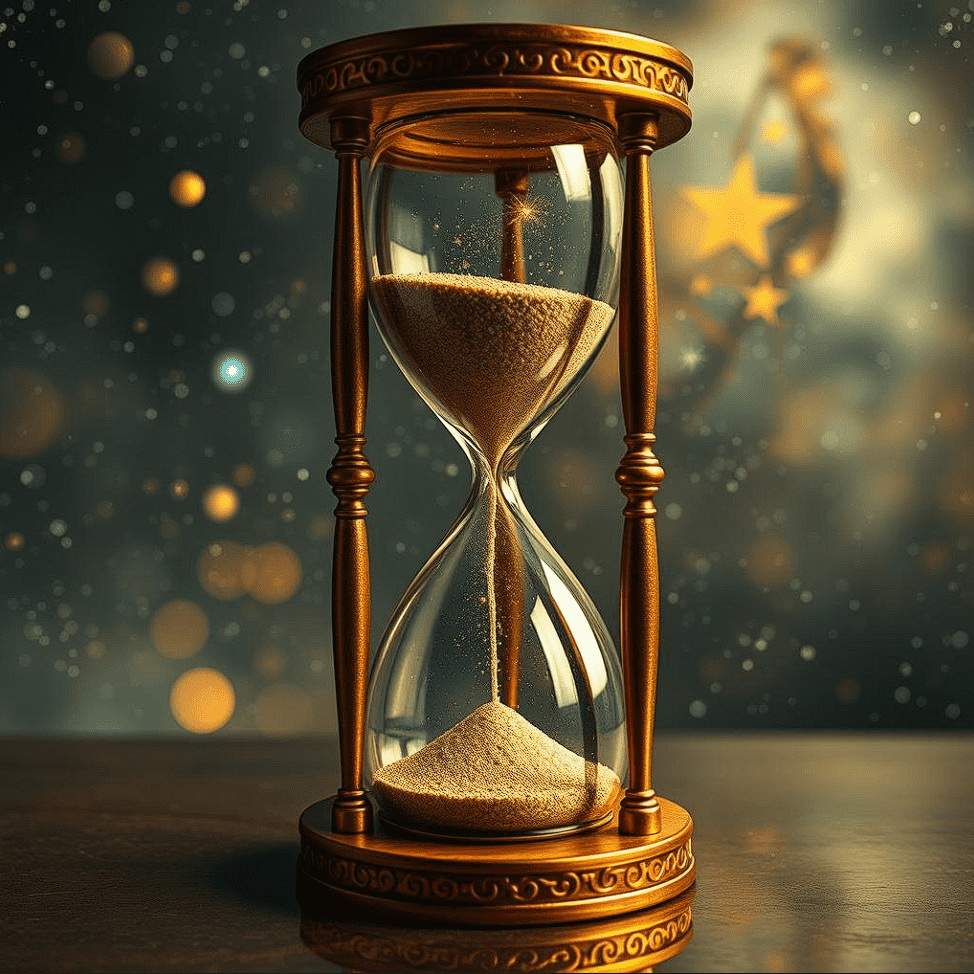
There is an old metaphor that makes everything even clearer. Every day at midnight, 86,400 “euros” are credited to your personal account: the seconds of your day. You can use them as you wish, but you cannot save them, invest them, or keep them for a better time, and—whether you use them or not—they are consumed until they reach zero at midnight, when you receive a new credit. Until one day, they stop coming.
If it were real money, would you waste it scrolling through meaningless videos or arguing with strangers online? Or would you spend it with a minimum of dignity?
The paradox is that Buffett, with 30 years of life and 1,000 euros, would rebuild his entire empire from scratch — calmly, methodically, and probably faster than the first time. Because his fortune is not in Berkshire Hathaway’s balance sheets; it’s in his mindset.
And yours? What is it built on?
Here is the point, as clear as a bucket of ice water: you, right now, have something no billionaire can buy. You have a quantity of future. Whether a lot or a little doesn’t matter — what matters is that it exists. And only you can decide whether to invest it, waste it, or numb it away in distraction.
Which brings us to the only question that matters — not philosophical, not provocative, but entirely practical:
What would you do with your life if you truly understood how short it is?
Whatever your answer is, the moment to begin is always the same: now.
Everything else — not time, but life — quietly slips away.
by Brunus


