Flowing with the Breath of the Cosmic Mind: Logos and Zōē as Our Guides
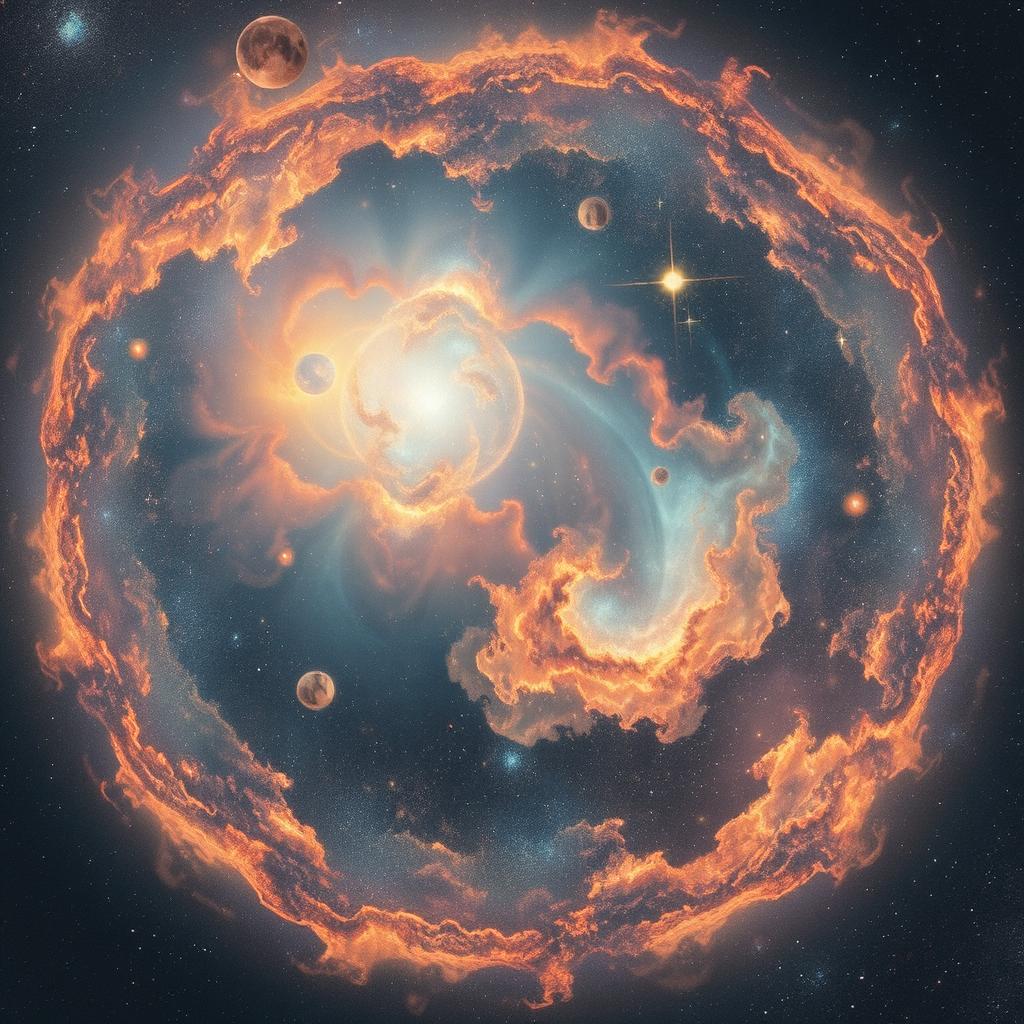
We often hear it in modern spiritual circles: trust the universe, go with the flow, align with the vibration of life. Beautiful ideas — but here’s the twist: they are not new. Two and a half millennia ago, the ancient Greeks were already speaking of the same cosmic truths, using two words that contain entire worlds: Logos and Zōē.
Logos (λόγος) — for Heraclitus, the philosopher of fire and change — was the living law of the cosmos, the intelligence that shapes and orders everything. It is not a god in the sense of a person, but rather the Mind of the Universe, the pattern behind the stars, the seasons, the growth of plants, the rise and fall of empires. Heraclitus dared to say that even the gods themselves are subject to the Logos. In other words, there is a principle greater than any deity — an eternal law to which all must bow.
Zōē (ζωή) in later Hellenistic thought, is the life-force that flows through this cosmic mind. If Logos is the order, Zōē is the breath. It is the vitality in a tree’s sap, the pulse in your veins, the shimmer of the sea at dawn. Zōē is not your life or my life — it is Life itself, eternal, inexhaustible, shared by gods, humans, and all living beings.
Put together, Logos and Zōē reveal a vision of the universe as alive and intelligent: a cosmic mind that breathes, and a cosmic breath that thinks. The Greeks imagined this not as a cold mechanism but as a great living organism, with its own rhythm and direction. To live well was to live in harmony with that rhythm — to “flow with the breath of the cosmic mind.”
From our modern New Age perspective, this sounds almost familiar: the universe (uni-verse, one direction) has a vibration, a flow, a sense, a direction. Swim against it, and you exhaust yourself. Align with it, and life supports you in ways that seem almost magical. The Greeks would nod — but they would add: this is not magic, it is law. As the Stoics later taught, Nature never breaks its own rules.
So how do we tune ourselves to this ancient current?
- Observe without forcing – Heraclitus advised listening to the Logos, which means paying attention to the signs of order around you: the cycles of nature, the patterns in events, even the subtle changes in your own moods. Don’t rush to act; first, hear the music before you start dancing.
- Simplify to harmonize – In Greek thought, excess is chaos. The simpler your life, the more clearly you feel the pulse of Zōē. Clear clutter, not just in your home, but in your commitments and thoughts.
- Act in alignment – The Greeks believed virtue (areté) was the human way of tuning to the cosmic order. If an action violates your integrity, it will pull you out of harmony no matter how “successful” it looks.
- Breathe with awareness – The word pneuma in Greek means both “breath” and “spirit.” Consciously breathing, especially in nature, is a way to remind yourself: you are part of the same breath that moves the stars.
When you live this way, you begin to notice that help arrives when it’s truly needed, and paths open at just the right moment. The Greeks would say it is not the universe “giving” you things — it is you moving in the same direction the universe is already going.
So next time someone tells you to trust the universe, remember: the ancients were already there, charting the flow. The Logos is the cosmic mind. The Zōē is its breath. And your life is an eddy in that vast, eternal river. Flow with it — and you will discover that the wisdom of the gods and the wisdom of the universe are one and the same.


