
• Link to Facebook
  • Link to Instagram
  • Link to Youtube
  • Link to Rss this site
  • Link to Mail
  • English English English en
  • Français Français French fr
  • Deutsch Deutsch German de
  • Italiano Italiano Italian it
  • Română Română Romanian ro
  • Español Español Spanish es
email: mediterraneanwayproject@gmail.com
Mediterranean Way Project
  • Home
  • About
    • The Mediterranean Way Project
    • The P.L.U.S.U.L.T.R.A. Codex™
    • Brunus Januensis
  • The Mediterranean Way To…
    • Nutrition & Healthy Food
    • Fitness & Wellness
    • Work & Business
    • Self Development & Spirituality
    • Family & Relationships
    • Art & Creativity
  • For Companies
    • Sales Course – Basic
    • Sales Course – Advanced
    • Communication Skills
    • Mastering Persuasive Presentations
    • Health and Wellness Programs
    • Stress Management and Work-Life Balance
    • Leadership Basic
    • Advanced Mediterranean Leadership Mastery
    • Mediterranean Coaching
  • For Individuals
    • The Secrets of the Mediterranean Way: much more than a diet! The Book
    • OnLine Programs
    • Training & Coaching
  • Articles & News
  • Contact
  • Click to open the search input field Click to open the search input field Search
  • Menu Menu

Prayer and Cosmic Harmony: rediscovering the ancient Mediterranean approach to the divine
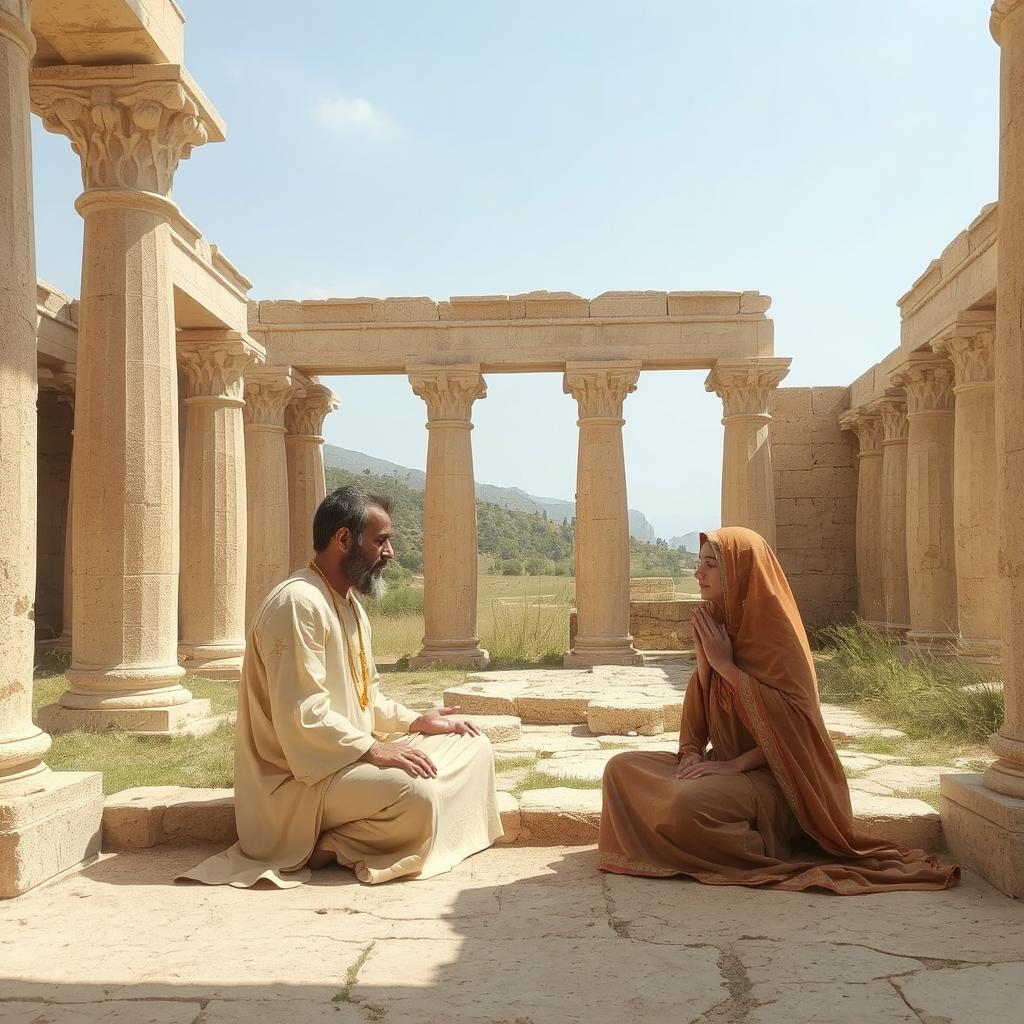
In the ancient Mediterranean world, prayer wasn’t just a matter of personal communication with the divine as we might think in a Judeo-Christian sense. It was a formal, almost transactional interaction between humans and the forces that governed the universe. For the people of that time, whether they were Egyptians, Greeks, or Romans, prayer was deeply intertwined with concepts like Kosmos (order of the universe) and Dike (justice), and it reflected their understanding of how humans fit into the grand scheme of things.

In these ancient cultures, the world was seen as governed by a cosmic order, and maintaining that order was the key to a harmonious life. In Egypt, this idea was embodied in the concept of Maat, the goddess and principle of truth, balance, and justice. Maat represented the very structure of the cosmos, and prayers were not just requests for help but affirmations of one’s alignment with this divine order. To pray was to acknowledge Maat’s presence and to pledge oneself to live according to the laws of harmony that she embodied. It was a way of maintaining the balance between chaos and order, a delicate equilibrium upon which all of life depended.

Similarly, in the Greek world, Kosmos represented the universe as an ordered and beautiful system, governed by divine forces and laws. When someone prayed in ancient Greece, it wasn’t simply to ask for personal favors but to align with this greater order. The Greek gods, especially Zeus, were seen as custodians of this cosmic structure. Prayer was a means of acknowledging the gods’ role in keeping everything in balance and of submitting to that order. The Greek idea of Dike (justice) ties in here as well, as Dike was seen as ensuring that cosmic and social justice prevailed. Through prayer, the Greeks sought not only personal well-being but the continuation of the world’s rightful balance.

In ancient Rome, the concept of Iustitia (justice) worked similarly, ensuring that societal and divine laws were respected. Roman prayer was formal, often conducted through strict rituals and sacrifices, to maintain the favor of the gods and the Pax Deorum—the peace of the gods. This wasn’t a casual affair; it was about ensuring that one’s actions fit within the divine laws that governed the universe. In both Greek and Roman contexts, prayer was more about conforming to a universal order than about individual salvation or forgiveness, which would later become central to Christian prayer.

What stands out in all these examples is that prayer wasn’t primarily about establishing a personal relationship with a deity in the intimate, conversational sense that developed in Judeo-Christian traditions. Instead, it was about reinforcing a connection with the cosmos, a way of showing reverence to the powers that maintained the world’s balance and order. You were part of a system, and prayer was one way to affirm your place within it.

Today, for those seeking a deeper, more ancient form of spirituality, this idea of aligning oneself with a cosmic order can be incredibly powerful. It asks us to step back from the highly individualized, often self-centered approach to prayer we might be familiar with, and instead view ourselves as small parts of a larger, interconnected web of life. The prayer of the ancient Mediterranean world invites us to recognize the forces beyond our control and to live in harmony with them, rather than trying to bend them to our will.

If you are looking to incorporate elements of this older spirituality into your life, consider shifting your focus from asking for specific outcomes to reflecting on how you fit into the broader rhythms of life. Reflect on the order around you—whether in nature, society, or your personal relationships—and think about how your actions align with maintaining balance and justice, not just for yourself but for the world at large. This ancient approach teaches humility and reverence for the forces that shape our existence, which is something we might all benefit from today.

The book is now available on Amazon

Search

Search Search

Subscribe & Download

Fill the blanks and receive your gift!

Loading...
Recent
  • Managing complexity: when logistics beats heroismJune 4, 2026 - 10:35 am
  • Would you cross the Rubicon, knowing you can only win—or...April 22, 2026 - 9:45 am
  • Does it ever feel like reality is working against you? It’s...March 30, 2026 - 3:40 pm
  • The True Potential of a Person, a Company, or a Team: A...March 12, 2026 - 11:41 am
  • From Sparta to the Market: The Invisible Grammar of Con...February 26, 2026 - 9:20 am
  • How to Solve Any Problem: Aristotle’s MethodFebruary 9, 2026 - 10:46 am
Popular
  • Areté: The Pursuit of Excellence in Modern LifeMay 15, 2024 - 4:08 pm
  • Kalokagatia: The Harmony of Beauty and GoodnessMay 15, 2024 - 4:11 pm
  • Paideia: The Foundation of Holistic EducationMay 16, 2024 - 10:03 am
  • Xenia: The Art of Hospitality and GenerosityMay 16, 2024 - 10:07 am
  • Mens Sana in Corpore Sano: The Harmony of Mind and BodyMay 16, 2024 - 10:28 am
  • Embracing the Mediterranean Way: A Guide to Health and ...May 16, 2024 - 10:32 am

Archives

  • June 2026
  • April 2026
  • March 2026
  • February 2026
  • January 2026
  • December 2025
  • November 2025
  • October 2025
  • September 2025
  • August 2025
  • June 2025
  • May 2025
  • April 2025
  • March 2025
  • February 2025
  • January 2025
  • December 2024
  • November 2024
  • October 2024
  • September 2024
  • August 2024
  • July 2024
  • June 2024
  • May 2024

Latest Articles

  • Managing complexity: when logistics beats heroismJune 4, 2026 - 10:35 am
  • Would you cross the Rubicon, knowing you can only win—or lose everything?April 22, 2026 - 9:45 am
  • Does it ever feel like reality is working against you? It’s not your imagination…March 30, 2026 - 3:40 pm
  • The True Potential of a Person, a Company, or a Team: A Lesson from AntiquityMarch 12, 2026 - 11:41 am
  • From Sparta to the Market: The Invisible Grammar of ConflictFebruary 26, 2026 - 9:20 am

Search the site

Search Search

Follow Me

  • facebook
  • youtube
  • instagram
  • linkedin
  • rss
  • mail

Contact

  • Mediterranean Way Project:
    much more than a diet!

  • mediterraneanwayproject@gmail.com

Follow us on Facebook

© Copyright 2026 - Mediterranean Way Project™ All rights reserved
  • Link to Facebook
  • Link to Instagram
  • Link to Youtube
  • Link to Rss this site
  • Link to Mail
Link to: Kleos, an ancient warrior code for today’s life Link to: Kleos, an ancient warrior code for today’s life Kleos, an ancient warrior code for today’s life Link to: The power of harmony: how music shaped young minds in ancient Greece (and what it means for us today) Link to: The power of harmony: how music shaped young minds in ancient Greece (and what it means for us today) The power of harmony: how music shaped young minds in ancient Greece (and what...
Scroll to top Scroll to top Scroll to top
  • English
  • Français
  • Deutsch
  • Italiano
  • Română
  • Español