
• Link to Facebook
  • Link to Instagram
  • Link to Youtube
  • Link to Rss this site
  • Link to Mail
  • English English English en
  • Français Français French fr
  • Deutsch Deutsch German de
  • Italiano Italiano Italian it
  • Română Română Romanian ro
  • Español Español Spanish es
email: mediterraneanwayproject@gmail.com
Mediterranean Way Project
  • Home
  • About
    • The Mediterranean Way Project
    • The P.L.U.S.U.L.T.R.A. Codex™
    • Brunus Januensis
  • The Mediterranean Way To…
    • Nutrition & Healthy Food
    • Fitness & Wellness
    • Work & Business
    • Self Development & Spirituality
    • Family & Relationships
    • Art & Creativity
  • For Companies
    • Sales Course – Basic
    • Sales Course – Advanced
    • Communication Skills
    • Mastering Persuasive Presentations
    • Health and Wellness Programs
    • Stress Management and Work-Life Balance
    • Leadership Basic
    • Advanced Mediterranean Leadership Mastery
    • Mediterranean Coaching
  • For Individuals
    • The Secrets of the Mediterranean Way: much more than a diet! The Book
    • OnLine Programs
    • Training & Coaching
  • Articles & News
  • Contact
  • Click to open the search input field Click to open the search input field Search
  • Menu Menu

Happy Valentine, or… Felix Lupercalia?
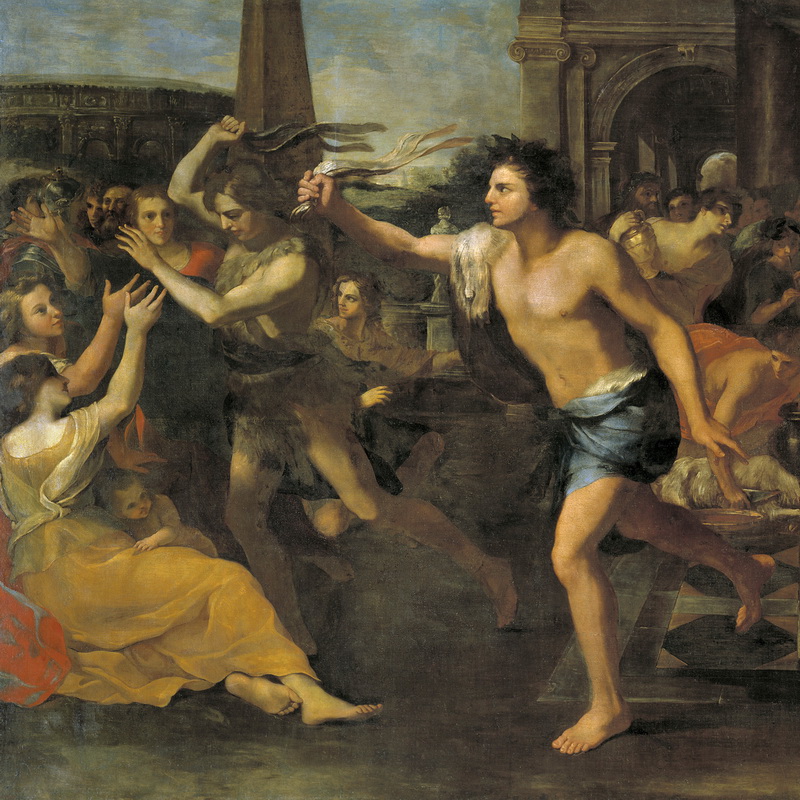
Ah, Valentine’s Day—the day of love, flowers, and overpriced chocolates. A day when the world transforms into a pink-and-red frenzy, couples post overly enthusiastic declarations of love, and singles either celebrate freedom or drown their sorrows in wine and Netflix. But what if I told you that this saccharine-sweet celebration has its origins in one of the wildest, most uninhibited pagan festivals of ancient Rome?

Let’s take a step back in time, to the Lupercalia, a festival that was anything but romantic in the way we understand romance today. If anything, it was a mix of fertility rite, purification ritual, and a full-on bacchanalian revelry where half-naked men ran around the city whipping women with strips of freshly sacrificed goatskin.

Yes, you read that correctly.

From Wolves to Love Stories
Lupercalia was celebrated every February 15th in honor of Lupercus, a god linked to fertility, wild nature, and (possibly) protection against wolves. It was also associated with the legendary she-wolf that nursed Rome’s founders, Romulus and Remus. The festival was a mix of archaic religious fervor and good old-fashioned debauchery.

Here’s how it went: the ceremony began in a cave—Lupercal—at the base of the Palatine Hill, where priests called Luperci sacrificed goats and a dog (symbolizing virility and purification, respectively). Then, in a scene straight out of an R-rated historical drama, the young men smeared themselves with the blood of the sacrifices, dressed in goat skins (or in some cases, didn’t dress at all), and ran wildly through the streets, striking women with strips of goat hide.

And the women? Far from running away screaming, they lined up to be whipped! The belief was that the touch of these sacred thongs (known as februa, from which the month “February” derives) would enhance fertility and ease childbirth. Clearly, ancient Rome had its own version of matchmaking.

The Church: “Enough with the Scandal!”
Now, imagine the reaction of the early Christian Church when faced with this spectacle. The Lupercalia was everything that Christianity sought to suppress: pagan, chaotic, and brimming with earthy, physical expressions of life and love. It was only a matter of time before the Church declared war on it.

Enter Pope Gelasius I, who, in the late 5th century AD, decided that enough was enough. He denounced the festival as un-Christian and replaced it with a more “civilized” celebration—one that honored Saint Valentine, a bishop who (supposedly) performed secret marriages for Christian couples during Roman persecutions. The Lupercalia was formally banned, and February 14th was declared a day of love—not the untamed, carnal kind of the old festival, but the more spiritual, poetic, and sentimental version we know today.

However, despite the Church’s efforts, echoes of Lupercalia persisted. The idea of love in February never quite faded, and over time, medieval poets, particularly Geoffrey Chaucer, helped shape Valentine’s Day into the courtly, romantic celebration that slowly evolved into today’s commercialized spectacle.

Lupercalia, Valentine’s Day, and the Echoes of the Pagan World
The story of Valentine’s Day is not unique. So many of our holidays—Christmas, Easter, Halloween—have roots deep in the ancient Mediterranean world. They were once pagan festivals that marked the rhythms of nature, fertility, harvests, and the divine cycles of life and death.

Lupercalia, in particular, is a reminder that love—whether expressed through poetry, candlelit dinners, or half-naked men running through the streets with goat skins—has always been a central human concern. The Church tried to refine it, society tried to package it, and Hallmark turned it into a billion-dollar industry. But at its core, the idea remains the same: love, in all its forms, deserves to be celebrated.

So, whether you’re exchanging roses and chocolates, avoiding the holiday altogether, or secretly considering reviving the goat-skin-whipping tradition (please don’t), just remember: today’s Valentine’s Day is just a more socially acceptable version of one of the wildest festivals in history.

Felix Lupercalia, everyone!

The book is now available on Amazon

Search

Search Search

Subscribe & Download

Fill the blanks and receive your gift!

Loading...
Recent
  • Managing complexity: when logistics beats heroismJune 4, 2026 - 10:35 am
  • Would you cross the Rubicon, knowing you can only win—or...April 22, 2026 - 9:45 am
  • Does it ever feel like reality is working against you? It’s...March 30, 2026 - 3:40 pm
  • The True Potential of a Person, a Company, or a Team: A...March 12, 2026 - 11:41 am
  • From Sparta to the Market: The Invisible Grammar of Con...February 26, 2026 - 9:20 am
  • How to Solve Any Problem: Aristotle’s MethodFebruary 9, 2026 - 10:46 am
Popular
  • Areté: The Pursuit of Excellence in Modern LifeMay 15, 2024 - 4:08 pm
  • Kalokagatia: The Harmony of Beauty and GoodnessMay 15, 2024 - 4:11 pm
  • Paideia: The Foundation of Holistic EducationMay 16, 2024 - 10:03 am
  • Xenia: The Art of Hospitality and GenerosityMay 16, 2024 - 10:07 am
  • Mens Sana in Corpore Sano: The Harmony of Mind and BodyMay 16, 2024 - 10:28 am
  • Embracing the Mediterranean Way: A Guide to Health and ...May 16, 2024 - 10:32 am

Archives

  • June 2026
  • April 2026
  • March 2026
  • February 2026
  • January 2026
  • December 2025
  • November 2025
  • October 2025
  • September 2025
  • August 2025
  • June 2025
  • May 2025
  • April 2025
  • March 2025
  • February 2025
  • January 2025
  • December 2024
  • November 2024
  • October 2024
  • September 2024
  • August 2024
  • July 2024
  • June 2024
  • May 2024

Latest Articles

  • Managing complexity: when logistics beats heroismJune 4, 2026 - 10:35 am
  • Would you cross the Rubicon, knowing you can only win—or lose everything?April 22, 2026 - 9:45 am
  • Does it ever feel like reality is working against you? It’s not your imagination…March 30, 2026 - 3:40 pm
  • The True Potential of a Person, a Company, or a Team: A Lesson from AntiquityMarch 12, 2026 - 11:41 am
  • From Sparta to the Market: The Invisible Grammar of ConflictFebruary 26, 2026 - 9:20 am

Search the site

Search Search

Follow Me

  • facebook
  • youtube
  • instagram
  • linkedin
  • rss
  • mail

Contact

  • Mediterranean Way Project:
    much more than a diet!

  • mediterraneanwayproject@gmail.com

Follow us on Facebook

© Copyright 2026 - Mediterranean Way Project™ All rights reserved
  • Link to Facebook
  • Link to Instagram
  • Link to Youtube
  • Link to Rss this site
  • Link to Mail
Link to: Sekhmet: the Egyptian goddess of destruction and healing Link to: Sekhmet: the Egyptian goddess of destruction and healing Sekhmet: the Egyptian goddess of destruction and healing Link to: Mystery Cults of the Ancient World: the Secret Societies of Greece and Rome Link to: Mystery Cults of the Ancient World: the Secret Societies of Greece and Rome Mystery Cults of the Ancient World: the Secret Societies of Greece and Rome
Scroll to top Scroll to top Scroll to top
  • English
  • Français
  • Deutsch
  • Italiano
  • Română
  • Español