
Happy Saturnalia and Merry Sol Invictus!
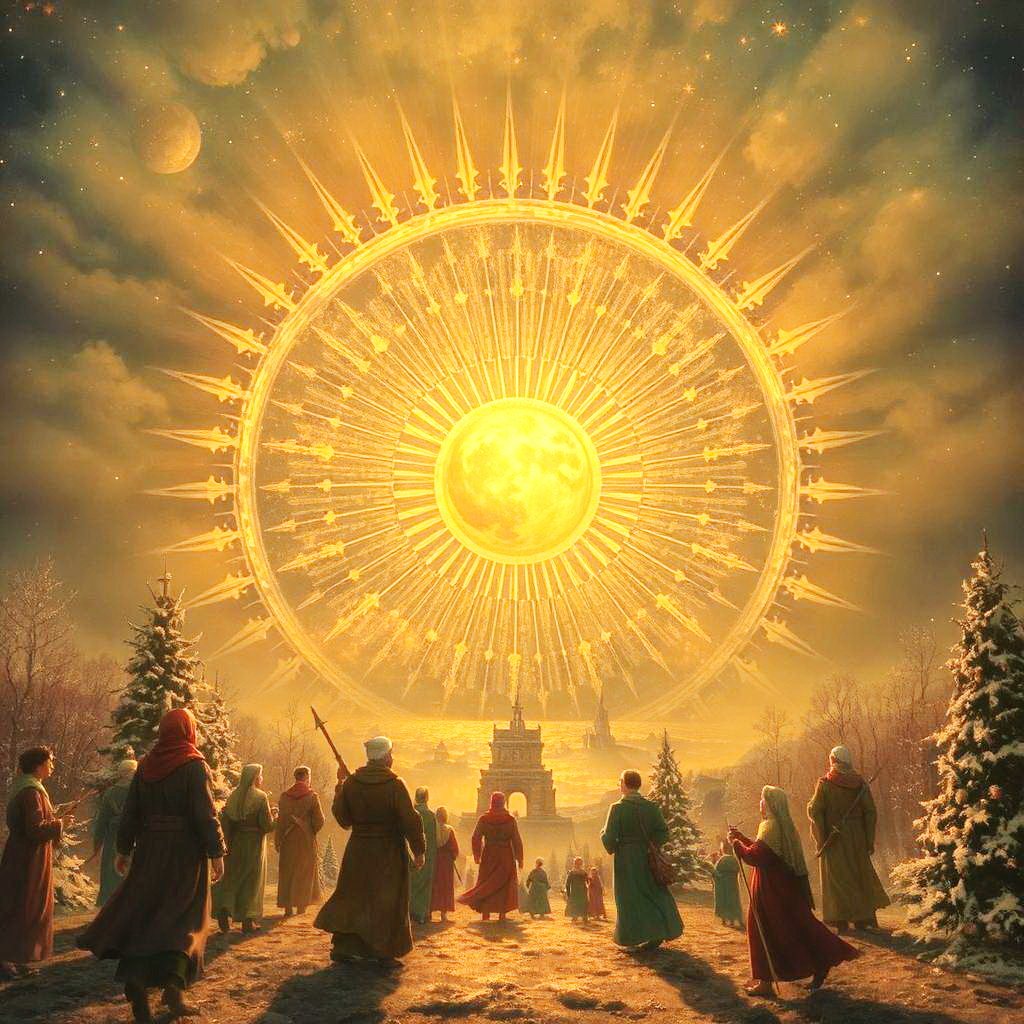
As the year approaches its darkest days, humanity has always turned to celebrations of light, renewal, and hope to ward off the chill of winter. From the Romans’ riotous Saturnalia to the cosmic reverence of Sol Invictus, and eventually to the joy of Christmas, the threads of these winter festivities weave a fascinating tapestry of cultural continuity. Let’s take a look at how these celebrations evolved, merging old and new in ways that still light up our lives today.
Saturnalia: Let the Good Times Roll
For the Romans, Saturnalia was the party of the year. Celebrated from December 17th to 23rd, it honored Saturn, the god of agriculture and time. It was a festival of abundance, reflecting a yearning for the mythical “Golden Age” when Saturn ruled and all was harmonious. Saturnalia was marked by feasting, gift-giving, and a delightful role reversal: slaves dined like masters, and social norms were playfully upended.
Candles lit the long nights, symbolizing the return of the sun, and everyone exchanged gifts—a tradition meant to encourage goodwill and community. In true Roman fashion, it was also a time for plenty of revelry and wine. But Saturnalia wasn’t just a hedonistic free-for-all. At its core, it reflected the human need to find light in the darkness and hope for the new year.
Enter Sol Invictus: The Unconquered Sun
By the time of Emperor Aurelian in 274 CE, the Roman Empire was vast and diverse, teeming with different beliefs and traditions. To unify this melting pot, Aurelian introduced the cult of Sol Invictus, or “The Unconquered Sun,” as a state religion. The sun, a universal and visible symbol, became a potent metaphor for resilience and cosmic order.
Aurelian fixed the celebration of Sol Invictus on December 25th, close to the winter solstice, when the days finally began to lengthen. The feast highlighted the triumph of light over darkness, a theme that resonated with agricultural and cosmic cycles. While Sol Invictus had its own rituals, it inherited many festive elements from Saturnalia—feasting, candles, and a sense of renewal—blurring the lines between the two.
Christmas: The Light of the World
Fast forward to the 4th century. With the rise of Christianity, church leaders sought to integrate the new faith into the existing cultural fabric. In 336 CE, the Christian Church officially adopted December 25th as the date to celebrate the birth of Christ. Why? Not only was it conveniently close to the solstice, but it also allowed the Church to co-opt popular pagan traditions and reinterpret them through a Christian lens.
In this sense, Christmas became a spiritual successor to both Saturnalia and Sol Invictus. Christ was framed as the true “Light of the World,” a spiritual sun whose birth heralded salvation. Yet many of the old customs remained: the exchange of gifts, the lighting of candles, and the communal feasts. Over time, the celebration of Christmas took on its own unique character, but its pagan roots are unmistakable.
Solstice Celebrations Beyond Rome
The Roman traditions weren’t the only solstice celebrations around the world. Across cultures, the winter solstice has long been a time for reflection and joy:
Yule (Norse and Germanic Tribes): The Norse marked Yule with feasting, bonfires, and the burning of the Yule log to banish winter’s darkness. Sound familiar?
Dongzhi Festival (China): This solstice festival emphasized family gatherings and the warming comfort of food, with tangyuan (sweet rice balls) symbolizing unity.
Inti Raymi (Inca): Though celebrated during the Southern Hemisphere’s winter solstice, the Inca honored the sun god Inti with grand ceremonies to ensure his return.
Shab-e Yalda (Persia): A night of poetry, fruits, and warmth, Yalda celebrates the victory of light over darkness and the triumph of the sun.
The universality of these traditions underscores how deeply the rhythms of nature shape human culture.
Why Does It Matter Today?
Even in our modern world, with electric lights and central heating, the winter solstice still whispers to something ancient in us. We string twinkling lights on trees, share gifts, and gather with loved ones in the darkest days of the year, echoing practices that are thousands of years old.
As we prepare to celebrate Christmas tomorrow, perhaps it’s worth remembering that this season has always been about hope and connection. Whether you’re lighting a candle for Saturnalia, toasting to Sol Invictus, or singing carols for Christmas, the essence remains the same: finding light in the darkness and celebrating the enduring cycles of life.
So, Happy Saturnalia, Merry Sol Invictus, and a very joyous Christmas to you all. May your days grow longer, your hearts warmer, and your spirits brighter. The unconquered sun, in all its forms, still shines upon us!


