
• Link to Facebook
  • Link to Instagram
  • Link to Youtube
  • Link to Rss this site
  • Link to Mail
  • English English English en
  • Français Français French fr
  • Deutsch Deutsch German de
  • Italiano Italiano Italian it
  • Română Română Romanian ro
  • Español Español Spanish es
email: mediterraneanwayproject@gmail.com
Mediterranean Way Project
  • Home
  • About
    • The Mediterranean Way Project
    • The P.L.U.S.U.L.T.R.A. Codex™
    • Brunus Januensis
  • The Mediterranean Way To…
    • Nutrition & Healthy Food
    • Fitness & Wellness
    • Work & Business
    • Self Development & Spirituality
    • Family & Relationships
    • Art & Creativity
  • For Companies
    • Sales Course – Basic
    • Sales Course – Advanced
    • Communication Skills
    • Mastering Persuasive Presentations
    • Health and Wellness Programs
    • Stress Management and Work-Life Balance
    • Leadership Basic
    • Advanced Mediterranean Leadership Mastery
    • Mediterranean Coaching
  • For Individuals
    • The Secrets of the Mediterranean Way: much more than a diet! The Book
    • OnLine Programs
    • Training & Coaching
  • Articles & News
  • Contact
  • Click to open the search input field Click to open the search input field Search
  • Menu Menu

Easter eggs, a tradition much older than you think
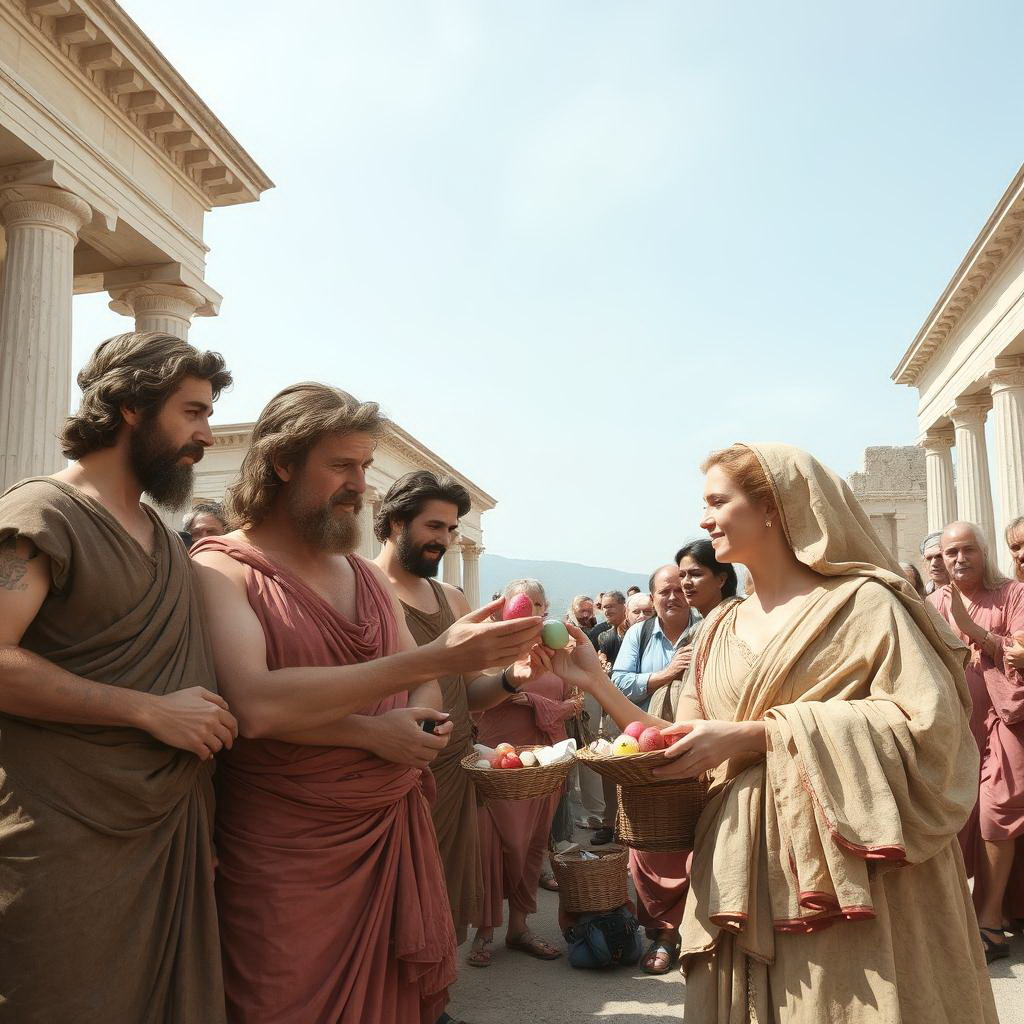
Every spring, we unwrap shiny chocolate eggs or dye real ones in cheerful colors, not always knowing why. It’s just something we do — a tradition passed down like a recipe or a family story. But few people suspect that this habit, so tightly linked to Easter today, is actually much older than Christianity itself. Long before the resurrection of Christ, people across the Mediterranean and the Near East were exchanging eggs as symbols of life, rebirth, and cosmic mystery.

In ancient Egypt, the egg was no breakfast item — it was sacred. According to some creation myths, the world began when the sun god Ra emerged from a primordial egg floating on the waters of chaos. To give someone an egg, then, was to hand them a symbol of life itself. Painted ostrich eggs have been found in tombs, treasures offered to accompany the soul on its journey to the next world. Even in death, the egg whispered of new beginnings.

The Persians, too, honored the egg during Nowruz, their New Year festival at the spring equinox. They would dye eggs and offer them to one another as wishes for fertility, vitality, and fresh starts. Spring was the Earth’s own resurrection, and the egg was its secret symbol. The custom survives even today, not just in Iran but across Central Asia.

In Greece, the egg took on a cosmic twist. In the Orphic mysteries, the universe was born from a glowing silver egg — cracked open by Phanes, the god of light and creation. The shell, in this story, is not just a shell — it’s the veil between potential and being, between night and day. Breaking an egg, then, becomes a quiet ritual of transformation.

Even in Rome, while chocolate wasn’t yet a thing, eggs were everywhere. They opened meals (ab ovo), appeared in springtime fertility rites, and were associated with the goddess Flora, bringer of blooms. Etruscan tombs — older still — have yielded decorated ostrich eggs placed next to the deceased, as if to say: death is just a pause before life cracks open once more.

So what did Christianity do? It did what Christianity often did — it gathered the richest symbols from older traditions and gave them new meaning. The egg became a perfect metaphor for the tomb of Christ: sealed, still, lifeless — until it breaks open into resurrection and eternal life. The fasting rules of Lent, which once forbade eating eggs, added a practical layer: by Easter, people had plenty to share. They boiled them, painted them, gifted them — a joyful surplus turned into a celebration.

Later came the chocolates, the bunnies, the sweet wrappers. But the essence remains. When we give an egg at Easter, we participate in a story told by many civilizations, across thousands of years: a story of hope, of life surprising death, of something waiting to hatch.

So next time you hold that egg in your hand — real or wrapped in foil — remember: you’re holding a universe, a prayer, a mystery as old as spring itself.

By Brunus

The book is now available on Amazon

Search

Search Search

Subscribe & Download

Fill the blanks and receive your gift!

Loading...
Recent
  • Managing complexity: when logistics beats heroismJune 4, 2026 - 10:35 am
  • Would you cross the Rubicon, knowing you can only win—or...April 22, 2026 - 9:45 am
  • Does it ever feel like reality is working against you? It’s...March 30, 2026 - 3:40 pm
  • The True Potential of a Person, a Company, or a Team: A...March 12, 2026 - 11:41 am
  • From Sparta to the Market: The Invisible Grammar of Con...February 26, 2026 - 9:20 am
  • How to Solve Any Problem: Aristotle’s MethodFebruary 9, 2026 - 10:46 am
Popular
  • Areté: The Pursuit of Excellence in Modern LifeMay 15, 2024 - 4:08 pm
  • Kalokagatia: The Harmony of Beauty and GoodnessMay 15, 2024 - 4:11 pm
  • Paideia: The Foundation of Holistic EducationMay 16, 2024 - 10:03 am
  • Xenia: The Art of Hospitality and GenerosityMay 16, 2024 - 10:07 am
  • Mens Sana in Corpore Sano: The Harmony of Mind and BodyMay 16, 2024 - 10:28 am
  • Embracing the Mediterranean Way: A Guide to Health and ...May 16, 2024 - 10:32 am

Archives

  • June 2026
  • April 2026
  • March 2026
  • February 2026
  • January 2026
  • December 2025
  • November 2025
  • October 2025
  • September 2025
  • August 2025
  • June 2025
  • May 2025
  • April 2025
  • March 2025
  • February 2025
  • January 2025
  • December 2024
  • November 2024
  • October 2024
  • September 2024
  • August 2024
  • July 2024
  • June 2024
  • May 2024

Latest Articles

  • Managing complexity: when logistics beats heroismJune 4, 2026 - 10:35 am
  • Would you cross the Rubicon, knowing you can only win—or lose everything?April 22, 2026 - 9:45 am
  • Does it ever feel like reality is working against you? It’s not your imagination…March 30, 2026 - 3:40 pm
  • The True Potential of a Person, a Company, or a Team: A Lesson from AntiquityMarch 12, 2026 - 11:41 am
  • From Sparta to the Market: The Invisible Grammar of ConflictFebruary 26, 2026 - 9:20 am

Search the site

Search Search

Follow Me

  • facebook
  • youtube
  • instagram
  • linkedin
  • rss
  • mail

Contact

  • Mediterranean Way Project:
    much more than a diet!

  • mediterraneanwayproject@gmail.com

Follow us on Facebook

© Copyright 2026 - Mediterranean Way Project™ All rights reserved
  • Link to Facebook
  • Link to Instagram
  • Link to Youtube
  • Link to Rss this site
  • Link to Mail
Link to: Epicurus and the art of managing chaos and complexity: small variations, big results. Link to: Epicurus and the art of managing chaos and complexity: small variations, big results. Epicurus and the art of managing chaos and complexity: small variations, big... Link to: The Pontifex Maximus, an office that has lasted for 2,700 Years Link to: The Pontifex Maximus, an office that has lasted for 2,700 Years The Pontifex Maximus, an office that has lasted for 2,700 Years
Scroll to top Scroll to top Scroll to top
  • English
  • Français
  • Deutsch
  • Italiano
  • Română
  • Español